


Understanding Addiction
Addiction is a complex condition shaped by the interaction of multiple factors. From birth onward, individuals begin to learn and are influenced by their environment. Throughout this process, they develop coping strategies to manage challenges and protect themselves. The nature of these coping strategies—whether adaptive or harmful—is closely influenced by the environment in which a person grows up, parenting approaches, and the surrounding sociocultural context. Unhealthy parental attitudes, a history of addiction within the family, risky peer relationships, difficulties in educational life, and societal attitudes toward addiction are among the factors that may increase vulnerability.
For this reason, discussions on the development of addiction should consider the individual from childhood—even infancy—taking family, societal, and cultural characteristics into account and evaluating the process within a holistic framework.

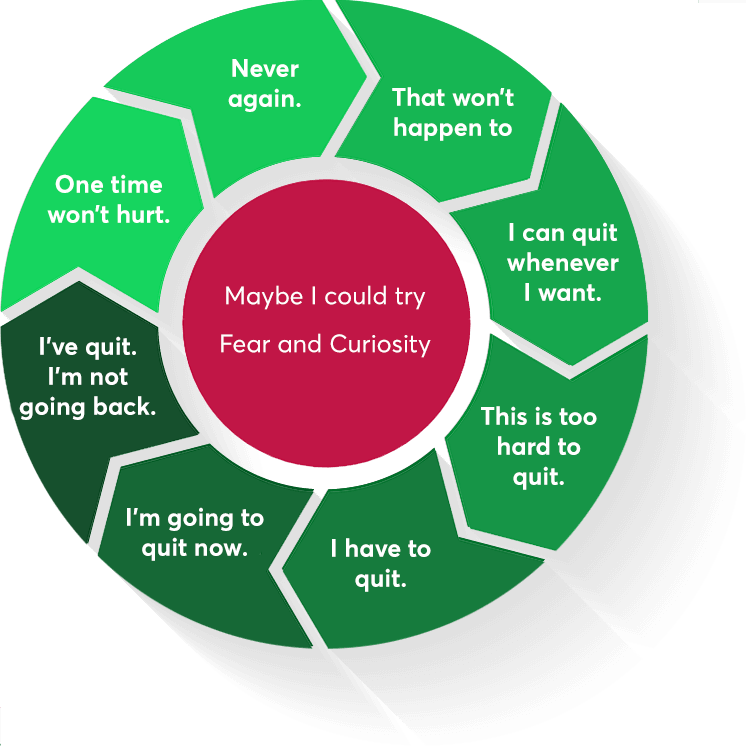
When examining the factors that contribute to addiction, it is difficult to pinpoint a single cause. Many factors can play a role in the development of addiction. Both psychological and biological factors influence the addiction process. Initially, a person may experiment with substance use out of curiosity or fear. Along with curiosity, the thought that "one time won’t hurt" lead to continued use.
Addiction affects dopamine, a neurotransmitter in the brain. Dopamine plays a key role in many essential functions, such as thought, emotion, motivation, movement, attention, and decision-making. While the frequency, duration, and type of substance used may vary, repeated use leads to damage in the dopamine system, impairing the brain's ability to function properly and resulting in the development of addiction. Therefore, addiction can be considered a brain disease.
It is also important to consider the psychological and behavioral aspects of addiction. These aspects may manifest either under the influence of alcohol or once its effects subside. Psychological interventions planned in line with the individual’s addiction criteria include coping skills development, anger management, family counseling, motivational interventions, and therapy approaches tailored to the individual’s treatment process.
The addiction criteria outlined in the DSM-5 Diagnostic and Statistical Manual of Mental Disorders (2013) are as follows:
- Use in larger amounts or for longer than intended
- Persistent desire or unsuccessful efforts to cut down or control use
- Spending a great deal of time obtaining or using the substance
- Continued use despite harm or negative consequences
- Craving, or a strong desire or urge to use
- Tolerance, as defined by a need for markedly increased amounts to achieve the desired effect
- Withdrawal symptoms
(American Psychiatric Association, 2013).
The American Psychiatric Association notes that the desire to feel good or enhance performance can contribute to the development of both substance-related and behavioral addictions. Substance use typically begins with a voluntary decision to engage with a substance. Individuals do not start using substances with the intention of developing a disorder; however, as use becomes repetitive, they gradually lose control over it. Even when they recognize that substance use is disrupting their daily functioning, they find themselves unable to stop. Over time, substance use shifts from voluntary engagement to compulsive use.
The American Psychiatric Association also indicates that addiction is associated with changes in the brain’s structure and functioning. As a result of these changes, impairments emerge in an individual’s mood, thinking, and behavior. Brain imaging studies show addiction-related disruptions, particularly in regions responsible for judgment, decision-making, learning, memory, and behavioral control.
How Addiction Develops
When examining the factors that contribute to addiction, it is difficult to pinpoint a single cause. Many factors can play a role in the development of addiction. Both psychological and biological factors influence the addiction process. Initially, a person may experiment with substance use out of curiosity or fear. Along with curiosity, the thought that "one time won’t hurt" lead to continued use.
Addiction affects dopamine, a neurotransmitter in the brain. Dopamine plays a key role in many essential functions, such as thought, emotion, motivation, movement, attention, and decision-making. While the frequency, duration, and type of substance used may vary, repeated use leads to damage in the dopamine system, impairing the brain's ability to function properly and resulting in the development of addiction. Therefore, addiction can be considered a brain disease.
It is also important to consider the psychological and behavioral aspects of addiction. These aspects may manifest either under the influence of alcohol or once its effects subside. Psychological interventions planned in line with the individual’s addiction criteria include coping skills development, anger management, family counseling, motivational interventions, and therapy approaches tailored to the individual’s treatment process.
THE ADDICTION CYCLE
References and Resources
For more information on the topics covered on this website, please see the sources below:
101 Questions About Addiction (2019). [Link: 101 Soruda Bağımlılık | Yeşilay (yesilay.org.tr)]
APA Dictionary of Psychology (2021). Addiction. [Link: https://dictionary.apa.org/addiction]
American Psychiatry Association (2021): What is addition? [Link: https://www.psychiatry.org/patients-families/addiction/what-is-addiction]
World Health Organization ICD-11 for Mortality and Morbidity Statistics (2021): Disorders due to substance use or addictive behaviours. [Link: https://icd.who.int/browse11/l-m/en#/http://id.who.int/icd/entity/1602669465]
World Health Organization ICD-11 for Mortality and Morbidity Statistics (2021): Disorders due to addictive behaviours. [Link:https://icd.who.int/browse11/l-m/en#/http://id.who.int/icd/entity/499894965]